
# Keep Standing: We Didn't Start Broken
*A reflection on Ezra's prayer, historical memory, and the resilience of a people*
---
## The Power of Remembering
In the book of Ezra, we encounter a powerful moment of prayer that speaks across centuries to our present moment. Ezra stands among traumatized people—formerly enslaved, recently returned from bondage, surrounded by rubble where their city once stood. In this devastation, he prays a prayer that teaches us something every generation needs to hear: **We did not start broken.**
Ezra's prayer begins with a phrase that stretches across generations: "From the days of our ancestors to this day, we have been deeply guilty." This isn't self-hatred—it's historical consciousness. Ezra understands something that makes many uncomfortable today: **history does not disappear just because it makes us uncomfortable.**
## Memory as Resistance
Black faith has always been a remembering faith. Our churches rang with memory songs:
*"Take me back, dear Lord, to where I first received You..."*
*"We've come this far by faith, leaning on the Lord..."*
These weren't songs of nostalgia—they were acts of resistance. We remembered ships crossing dark waters, chains biting skin, auction blocks where families were separated like livestock, lynching trees, schools that wouldn't teach us, neighborhoods that wouldn't house us, ballots that wouldn't count us.
Not because we are bitter, but because **memory is how oppressed people protect their humanity.**
Here's a truth that challenges the powerful: **Forgetting is a luxury of the powerful. Remembering is a necessity for the oppressed.**
## Naming Systems, Not Stereotypes
Ezra does something radical in his prayer. He names systems, not stereotypes. He says Israel was handed over "to kings, to the sword, to captivity, to plundering, to shame."
Notice what he doesn't do—he doesn't spiritualize their trauma. He politicizes it. Because Babylon didn't defeat Israel because Israel was weak. Babylon defeated Israel because Babylon was brutal, violent, and evil.
**Empires are not accidents. They are engineered.**
Black suffering in America did not emerge from moral deficiency. It emerged from policy, from profit, and from power. Slavery was engineered. Segregation was legislated. Redlining was calculated. Mass incarceration is intentional.
Somebody designed the ships. Somebody wrote the laws. Somebody drew the maps. Somebody built the prisons.
**Oppression has architects.**
It's easier to blame victims than to confront systems. It's easier to call suffering a character flaw than to admit it's a business model. It's easier to preach personal responsibility than repentance for national sin.
## The Myth of Inferiority
Empire never stops at violence. After violence comes narrative. After chains come blame. Every empire tells the same lie: **If you are suffering, it must be your fault.**
Ezra refuses that myth. He does not internalize empire's propaganda. He does not confuse trauma with truth. He does not call wounds weakness.
He names what happened to them, not what was wrong with them.
This is a word we still need to hear. Many of us are still apologizing for systems we didn't design. Still carrying shame for wounds we didn't cause. Still internalizing narratives created to justify our exploitation.
**It was not your fault. It was a design.**
Your grandmother's fear? That's not weakness—that's trauma, that's memory. Your uncle's anger? That's not pathology—that's the result of always being called out of his name and never being seen when present. Your neighborhood's struggle? That's not shame—that's the result of designed underinvestment.
## You Were Handed Over, But God Never Handed You Away
Here's the good news in Ezra's prayer: **You were handed over, but God never handed you away.**
Enslaved people who didn't know what tomorrow would hold, with hands tattered and torn, picking someone else's cotton, backs victims of a merciless sun—yet they had a theology that allowed them to raise their heads and sing:
*"Up above my head, I hear music in the air... There must be a God somewhere."*
That's the people we descend from. People who were treated terribly yet kept smiling. People who were told "no" yet kept coming. People who had ditches dug to drown them and learned to swim on their own.
## Still Standing
Ezra doesn't pray from a throne. He prays standing in rubble, surrounded by people who had every reason to disappear.
Notice what he doesn't say. He doesn't say, "We're finished."
**We are not a footnote in somebody else's success story.** We're not an accident of history. We're not a mistake that somehow survived.
We are evidence—evidence that chains can't kill a people God intends to keep. Evidence that ships can't drown a destiny God has already spoken. Evidence that whips can't erase an image of God that God refuses to abandon.
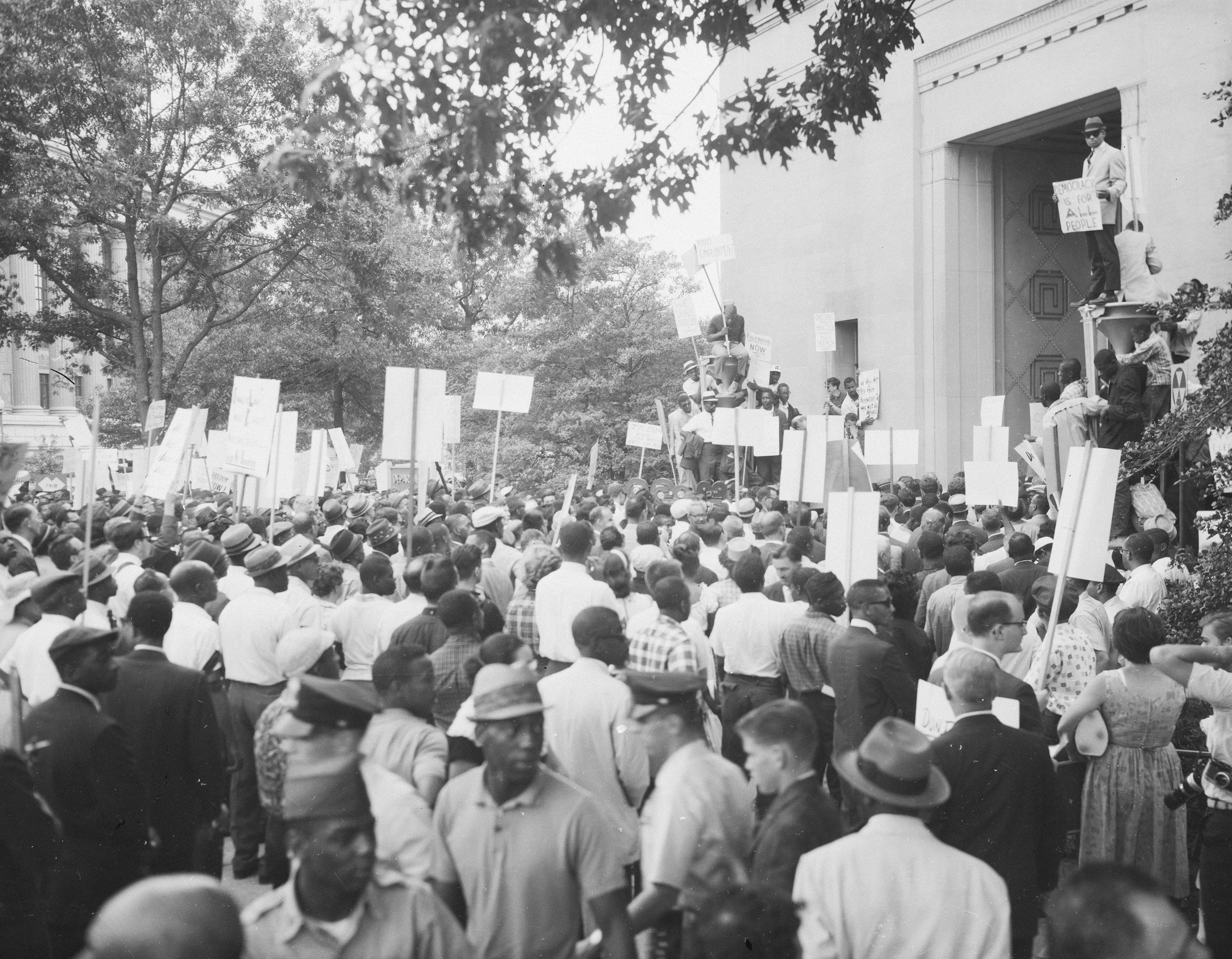
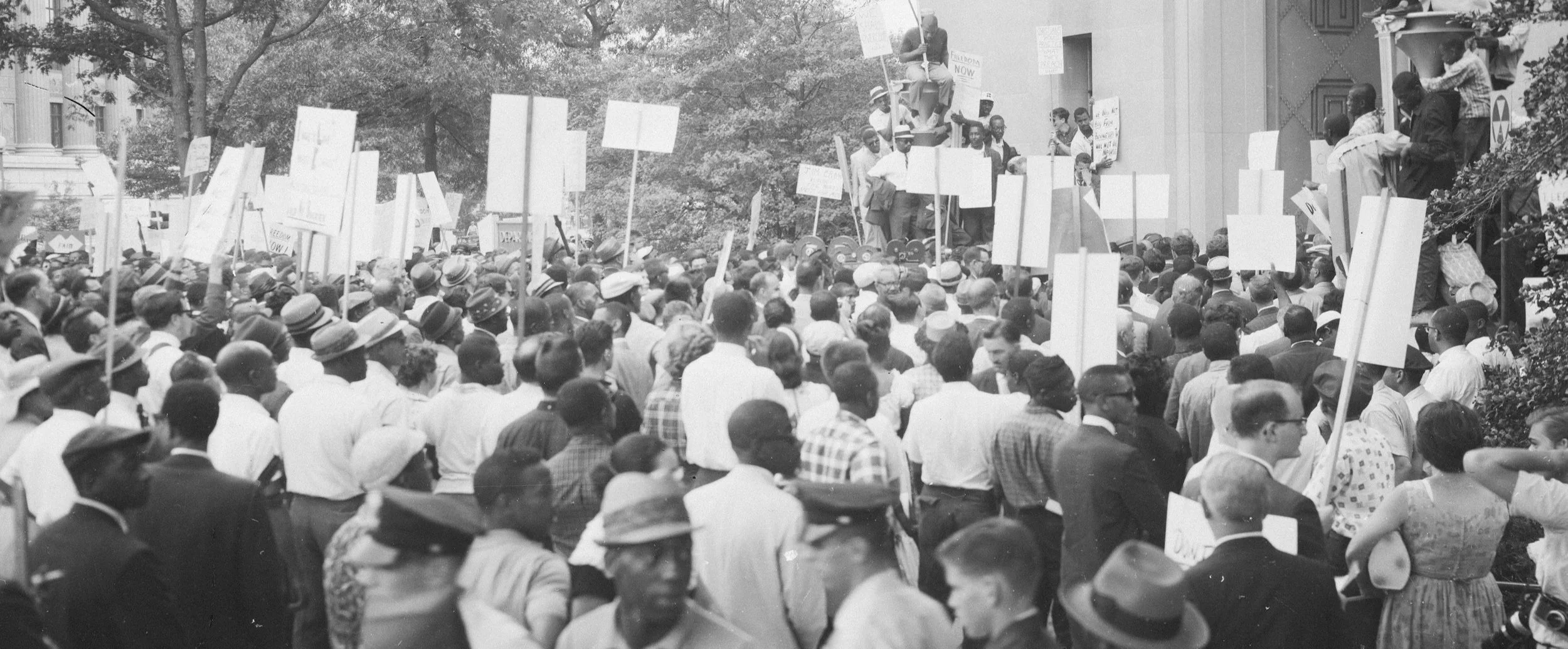
We stood in fields where we weren't supposed to read, but learned anyway. We stood in churches they said wouldn't last, but built them anyway. We stood in schools they called inferior, but educated generations anyway. We stood in neighborhoods they tried to starve, but found ways to survive, thrive, and live.
**We are still standing.**
Not because America was kind. Not because history was fair. But because God never let empire have the final word over our lives.
## The Call to Keep Standing
Being bruised is not the same as being broken. Surviving is not shameful—it's sacred. Remembering wounds doesn't weaken faith—it deepens it.
So here's the word for today:
**You're not broken—you're bruised.** And bruises testify to impact, not inferiority.
To Simone Biles, keep flipping. To Kendrick Lamar, keep rapping. To Denzel Washington, keep acting. To our scholars, keep writing. To our teachers, keep teaching. To our builders, keep building. To our activists, keep protesting. To our leaders, keep leading. To our preachers, keep preaching.
Keep loving Black children loudly. Keep telling the truth boldly. Keep standing when empire wants you to fall.
**Because we didn't start broken. And by the grace of God, we ain't done yet.**
The truth can be dangerous, but God challenges us to keep standing. They can't kill the people God determined to keep. Any other people would have been driven off the face of the earth. But here we are—the next generation and the next generation.
Still strong.
---
*The fear might be because you can't deny strength. You can hate it, but you can't deny it. And when you can't deny it, you try to destroy it. But we're still here. We're still standing. And the best is yet to come.*